

The best luxury saree brands distinguish themselves through five clear, checkable markers: hand-executed embroidery, authentic zari (gold or silver thread) work, premium fabric quality, ethical and traceable artisan sourcing, and price transparency that reflects real craftsmanship hours rather than brand markup. Here's exactly how to evaluate each one before you buy.
What Makes a Saree Truly "Luxury"?
A luxury saree distinguishes itself from mass-produced pieces through five non-negotiable markers: hand-executed embroidery, authentic zari (gold or silver thread) work, premium fabric quality, ethical and traceable artisan sourcing, and pricing that transparently reflects real craftsmanship hours, not just brand markup.
Here's how to evaluate each one.
1. Hand-Embroidery Craftsmanship
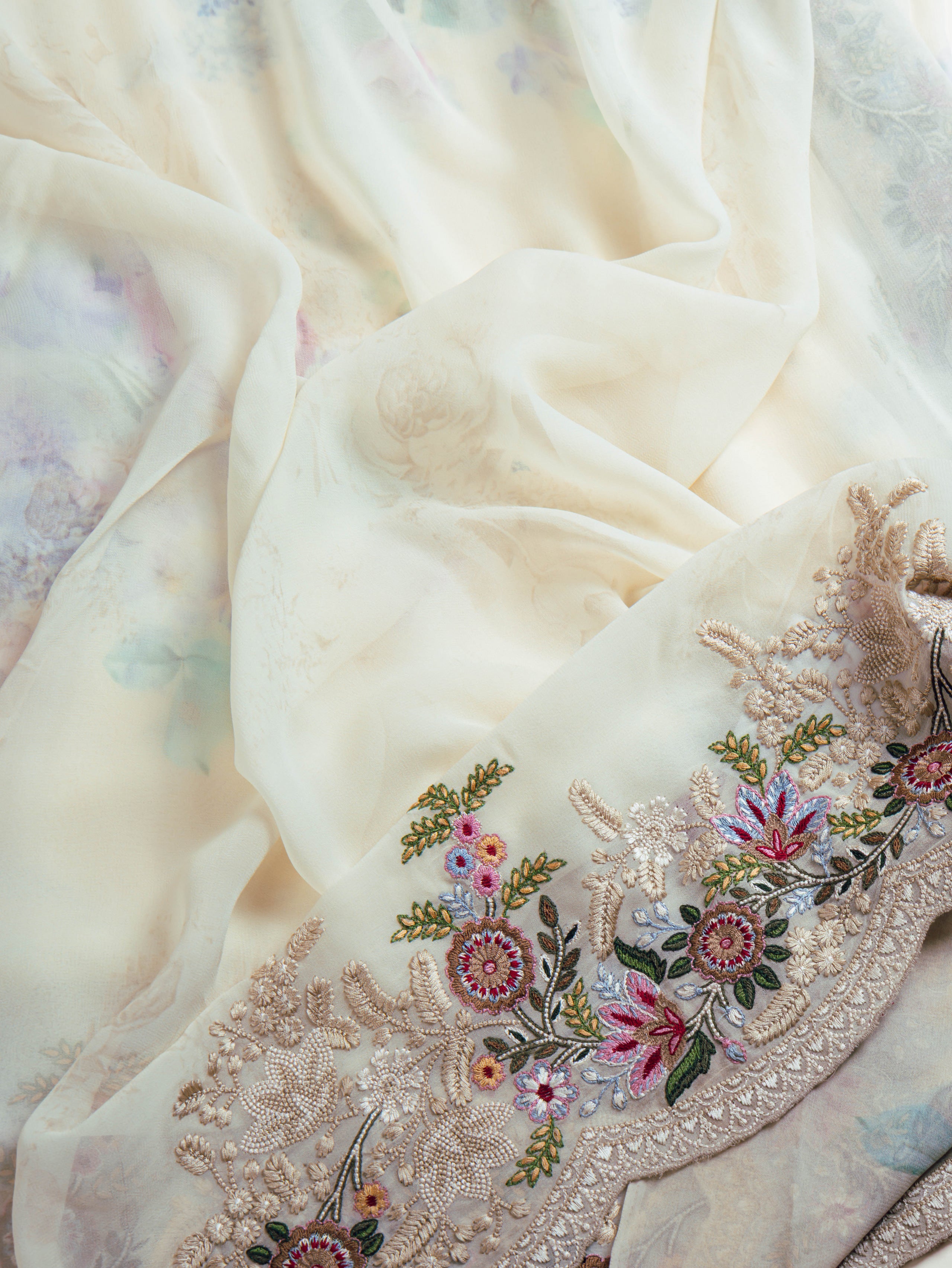
Genuine hand-embroidery has subtle irregularities, slightly uneven thread tension, and tiny variations between motifs, because no two human hands work identically. Machine-replicated "hand-look" embroidery, by contrast, is mechanically uniform, which is actually the giveaway that it isn't handmade.
Ask the brand directly: how many artisan-hours go into one piece? Genuine luxury houses are usually transparent about this. A single hand-embroidered georgette saree, for instance, can take 40-60 hours of skilled handwork, and brands like Mehr by Annu publish this kind of artisan-hour detail openly, rather than treating it as a trade secret.
Explore Hand-Embroidered Georgette Collection
2. Zari Work - Real vs. Synthetic
Real zari work traditionally uses fine gold or silver-coated thread, while synthetic "zari-look" thread is plastic-coated polyester. The difference matters for both longevity and value:
- Real zari ages gracefully, develops a soft patina, and doesn't fray at the edges.
- Synthetic zari tends to look "too shiny," frays faster, and loses color after a few washes.
A trustworthy brand will tell you upfront which type of zari is used on which piece, not bury it in fine print.
3. Fabric Quality & Drape
The fabric determines how a saree falls, breathes, and lasts. Look for:
- Fiber source - Pure silk, pure georgette, or a blend (and is the blend disclosed?).
- Weight and weave density - Heavier isn't always better; it depends on the drape you want.
- Breathability - Especially important for sarees worn through long Indian summers or multi-hour events.
A saree that drapes beautifully in a store but feels stiff or scratchy after an hour of wear is usually cutting corners on fabric, not embroidery.
4. Artisan Sourcing & Ethics
This is where many "luxury" brands fall short. True luxury isn't only about the finished product, it's about who made it and how they were treated.
Look for brands that name the artisan cluster or region behind a piece (Lucknow chikankari, Banarasi weavers, Kolkata zardozi karigars, etc.), rather than vague claims like "handmade in India." Traceability back to the actual craftsperson is one of the clearest signals of a genuinely ethical luxury brand.
See how Mehr by Annu sources its hand-embroidered pieces
5. Price Transparency
Luxury pricing should be explainable. A saree priced at ₹15,000 should make sense once you understand the artisan hours, fabric grade, and zari type that went into it. Be cautious of brands that:
- Use "luxury" as a marketing label without justifying the price breakdown.
- Discount aggressively and frequently (a sign the original price was inflated, not justified by craft).
6. Customization & Bespoke Options
Many top luxury saree brands now offer some level of customization, choice of border width, color combinations, or made-to-order pieces for weddings and milestone events. This level of flexibility usually signals a brand working closely with artisans rather than mass-producing off a single template.
Quick FAQ
1. What's a reasonable price range for a genuine hand-embroidered luxury saree?
Depending on fabric and embroidery density, expect anywhere from ₹8,000 to ₹50,000+; the wide range reflects artisan hours, zari type, and fabric grade.
2. How can I tell if zari work is real or synthetic at a glance?
Real zari has a softer, slightly muted shine and doesn't fray easily at cut edges; synthetic zari often looks uniformly bright and frays or blackens faster with wear.
3. Are luxury sarees actually worth the investment?
If the price reflects genuine hand-craftsmanship, ethical sourcing, and quality fabric, yes, these pieces are typically made to last decades, not seasons.
Each piece is made with documented artisan hours, traceable craftsmanship, and transparent pricing, exactly the criteria this guide walks through.
